


Sewage treatment works
Sewage treatment works treat and clean sewage and waste water before they are released back into the environment.
Properly treating sewage is essential for protecting public health and the environment, and sewage treatment works play a vital role in maintaining the health and safety of communities.
The sewage treatment process involves several stages, including:
- When you flush the toilet or empty the sink, the wastewater goes down the drain and into a pipe which takes it to a larger sewer pipe under the road. The sewer then joins a network of other sewers and takes the wastewater to a sewage treatment works.
- Removing large objects including items that should never have been put down the drain in the first place, such as wet wipes, nappies, sanitary items and cotton buds.
- Wastewater is put into large settlement tanks to separate human waste from the water. The human waste sinks to the bottom of the tank. This is called settled solids or sludge. In a circular tank, large arms or scrapers slowly move around the tank and push the sludge towards the centre where it is then pumped away for further treatment.
- Most of the sludge is recycled as fertiliser on farms, but it can also be heated to produce energy.
- Once the wastewater is clean, it is returned to rivers or the sea. The quality of the cleaned wastewater is strictly regulated and companies thoroughly test it (see below). If the river that it will be returned to is particularly sensitive the cleaned water can be further slowly filtered through a bed of sand.
Water companies have invested £135 billion since the 1990s to improve wastewater infrastructure, but some of the legacy still remains from previous generations. This is why £104 billion is being invested between 2025 and 2030, including upgrading wastewater treatment works and storm overflows.
Sewage treatment works are doing a much better job at treatment than ever before. For example, key pollutants discharged into rivers like phosphorus and ammonia have been significantly reduced (67% less phosphorus and 79% less ammonia than in 1995). This is important because phosphorus can deprive water of oxygen, and ammonia can harm aquatic life. As a result of these efforts, there has been a notable increase in snails, worms and insects in rivers across England, indicating an improvement in water quality. In addition, many rivers that were heavily polluted in the past (during the industrial revolution) are now home to salmon and otters, further demonstrating the positive impact of these measures.
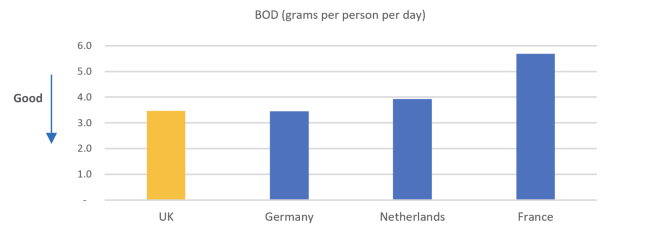
A key measure of the quality of sewage treatment is 'biological oxygen demand', which tracks one of the biggest immediate impacts on rivers from discharged sewage.
Permits and Monitoring
The Environment Agency sets strict permits for each sewage treatment works, controlling the exact amount of chemicals that can be put back into nature. This includes levels of phosphorus and nitrates which are the main causes of algal blooming and excess weed growth, which harm fish and other species. 99% of sewage works now comply with their legal permits, up from 77% in the 1980s, and 88% in the early 1990s. The EA then oversees a regime of monitoring against those permits including:
- Effluent Quality: the quality of the treated effluent discharged from the sewage treatment works to prevent pollution of water bodies. This includes measurements such as biochemical oxygen demand (se the graph above).
- Sampling, Analysis & Compliance Inspections: These inspections are to verify compliance with environmental regulations and may be scheduled or unannounced.
- Operational Monitoring: This ensures that the treatment works are properly operated and maintained to achieve effective treatment and minimise environmental impacts.
- Environmental Impact Assessment: assessing the potential environmental impacts associated with the discharge of treated effluent.
In addition to the above permit audits, water companies must comply with the Operator Self Monitoring (OSM) regime. This requires water companies to monitor and report on specific aspects of their operations and environmental performance.
+ -
A sewage treatment works is a facility that treats wastewater from households and businesses to remove pollutants and make it safe to discharge into the environment.
+ -
A sewage treatment works typically operates through a series of physical, chemical, and biological processes that remove contaminants from wastewater. These processes may include screening, sedimentation, biological treatment, and disinfection.
+ -
Sewage treatment works provide several benefits, including protecting public health by removing harmful contaminants from wastewater, reducing water pollution and improving water quality, and recovering resources that can be reused or recycled.
+ -
Sewage treatment works can contribute to a circular economy by recovering and reusing resources from wastewater, such as nutrients, energy, and water. This can reduce waste and increase resource efficiency.
+ -
Regulation plays an important role in ensuring that sewage treatment works meet environmental standards and operate safely. Regulatory bodies may set limits on pollutants that can be discharged into the environment and monitor compliance with these limits.
+ -
Individuals can support sewage treatment works by properly disposing of waste and not flushing items that can cause blockages or damage to the treatment system. Conserving water can also help reduce the amount of wastewater that needs to be treated.
FAQs
Read more

Fighting fatburgs
Wet wipes, cotton buds, sanitary products and fats oils block sewers

Storm overflows
Water companies are putting in place a major infrastructure programme to reduce CSO spill activity