


Improving and protecting rivers and seas
£24bn
invested between 2025-30 to improve the environment
15,000km
of rivers will be improved between 2025-30
Rivers, lakes and coastal waters are essential for recreation, health and wellbeing.
The quality of rivers has improved significantly, whether measured by the presence of pollutants or by indicator species. This has resulted in wildlife such as salmon and otters returning in recent years to rivers that had been uninhabitable for decades. The numbers of freshwater invertebrates have also shown a strong recovery with a 66% increase observed in England’s rivers since 1989.
Whilst the most serious issues of the past have been addressed, our rivers and coasts continue to be at threat from population growth, climate change and newly emerging pollutants.
Between 2025-2030 water companies will invest £24 billion to improve the environment, including
- reducing spills from storm overflows into rivers and seas by 45% on 2021 levels
- improving or protecting over 15,000km of rivers across England and Wales
Water companies are also only part of the solution – improving the health of our rivers requires collaboration across multiple different sectors. 28% of reasons for rivers in England not achieving Good Ecological Status (GES) are caused by the water industry. This is compared to 41% caused by Agriculture and Rural Management and 11% caused from the urban and transport sectors.
Bathing Waters
There are about 600 locations protected in law for bathing. These are the only locations where investment has been approved by regulators for protecting swimmers, and monitored for that purpose. UK designated bathing waters are mostly coastal however there is a growing interest in inland bathing waters - in part to the rise in popularity of pastimes like wild swimming and paddleboarding - and a number of river locations are now designated or in the process of being designated.
Classification
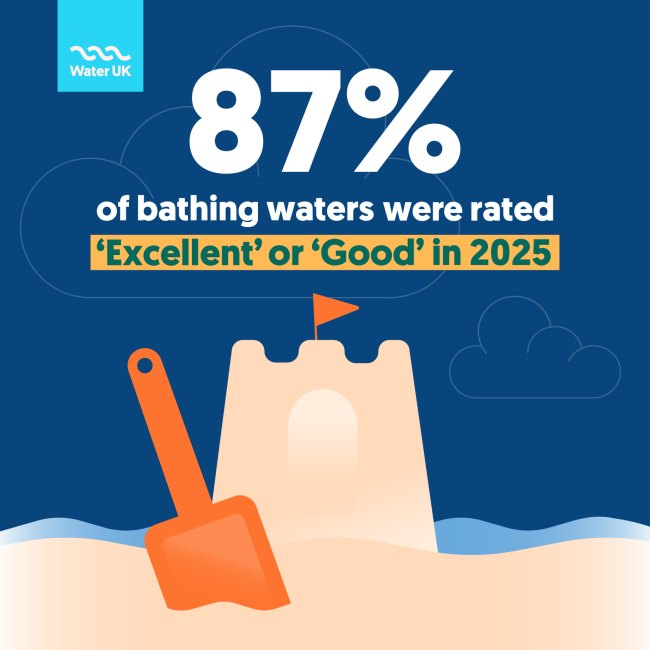
Bathing Waters are categorised as ‘excellent’, ‘good’, ‘sufficient’ or ‘poor’ based on bacteria levels. Bacteria can get into the water from a number of sources including; animal manure, road run off, sewage and wildlife. In 2025, 93% of bathing waters in England have met minimum water quality standards, with 87% of bathing waters being rated as ‘good’ or ‘excellent’. This is in stark contrast to the early 1990s, when less than a third of bathing waters would have been rated as ‘good’ or ‘excellent’.
The local council must display information (online and on signs) about water quality and pollution sources during the bathing season. If there is a temporary pollution incident they must explain the nature of the problem and how long it’s likely to last. The Environment Agency produces a profile for each designated bathing water displaying the latest classification. Profiles provide lots of useful information about the bathing water and can help people decide on where to go.
Read more


Investing to stop sewage spills
Water companies are investing in storm tanks and nature-based solutions to almost halve storm overflow spills.

Sustainable drainage
Rainwater is a major cause of storm overflow activation and flood risk