



Views
Are water companies able to spend enough on maintaining their assets?
When a water treatment works failed in Kent at the end of last year, tens of thousands of customers in the Tunbridge Wells area were left without drinking water. It was a serious, visible reminder of what happens when the infrastructure that we rely on every day stops working.
Events like this are thankfully rare. But they raise an important question: are water companies being allowed to spend enough money to look after their assets properly?
New analysis presented at a conference of engineers, economists and government policy officials in London last month suggests the answer may be no, and the gap could be significant.
In Scotland, the water regulator uses a method based on how long assets are expected to last before they need replacing. When the same approach was applied to water companies in England and Wales by consultants Economic Insight, the results were striking. Companies appear to be spending less than half of what they would need to sustainably maintain their networks over the long term.
Under the current regulatory system, some pipes and equipment are implicitly assumed to last for centuries. The ‘Scottish approach’ would instead replace them in decades.
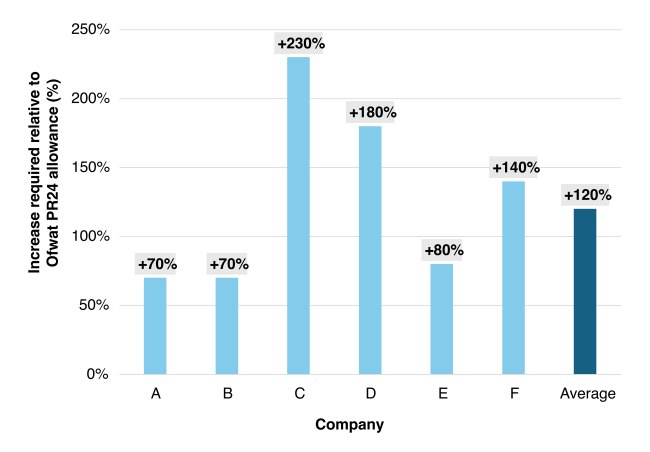
New analysis from Water UK suggests that applying the same average uplift to all water companies in England and Wales of around 120% would require an additional £29 billion of capital maintenance over five years (in 2022-23 prices).
Why does it matter? Because if the condition and performance of water company assets (their ‘asset health’) is not sufficiently maintained, then pipes can burst, pumps can break and treatment works can malfunction. Maintaining assets properly means fixing things before they break, not after. The current regulatory approach has not always made it easy to do that. As the UK and Welsh Governments’ independent review of the water sector found, “government and regulator pressure on bills played an important role in what can now be seen as underinvestment” over more than a decade.
The good news is that there is growing consensus that the system needs to work differently. The UK Government's upcoming Transition Plan for water sector reform will need to turn that consensus into action. The sooner new asset health standards are in place, with a more sustainable way for setting price control allowances, the sooner investment decisions can properly reflect the true condition of the infrastructure we all depend on. That will make water companies much better placed to avoid the kind of outages we saw in Kent last year.
See below for conference materials from the conference on 4th March 2026 at the Institute of Civil Engineers.
Share


