



Views
Fifty years on from 1976: what's different this time?
In the summer of 1976, some towns could only get water from a standpipe in the street, and people queued with a bucket. Reservoirs and rivers dropped to record lows. The government appointed a Minister for Drought, Parliament rushed through emergency laws to ration supplies, and people were told to put a brick in the cistern and share a bath. The summer of 1976 is iconic for many and the first point of comparison for periods of extreme weather.
However, by some measures, the weather this year is even more extreme than fifty years ago: this summer was the UK's hottest on record, with five heatwaves and 34 days above 30C. We’ve seen the driest July since records began in 1836 and more than 70% of England is now in drought. However, while ten water companies have brought in hosepipe bans covering over 28 million people, nobody has had to queue at a standpipe. That is despite eleven million more people living in England than in 1976, and each person now using around 140 litres of water a day, up from under 100 litres back then.
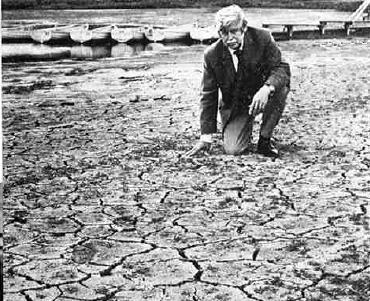
The difference begins with preparation. In 1976, much of the response was improvised, and supply was so fragmented that Leeds was heading for severe problems while Bradford, a few miles down the road, was fine. Today, every water company has a drought plan which benefits from public consultation and is approved by the Environment Secretary. These plans set out in advance exactly when each restriction has to come in, and why.
We are now far better able to move water around and between regions. The fragmentation that left Leeds and Bradford in such different positions has largely gone: after coming close to running out of water in 1995, Yorkshire Water built an underground grid that can shift supplies right across its region. This summer companies have been using networks like it to relieve their driest areas, guided by real time monitoring of rivers and groundwater that did not exist fifty years ago.
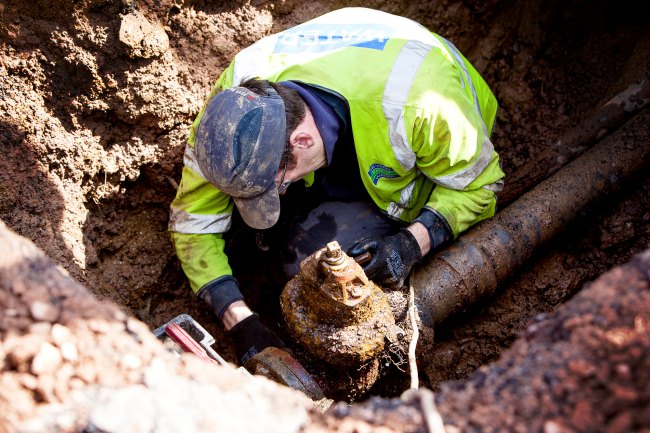
Our network loses less water than ever before from leaks. We are also able to find and fix them faster than ever. Southern Water alone fixed almost 3,500 leaks in the first three weeks of its hosepipe ban.
None of this makes this an easy summer. Reservoir storage in England was 66% in the second week of August, 14 percentage points below where it usually sits at this time of year.
We are likely to start seeing more extended periods of dryness. The Met Office has even said that “climate extremes are becoming the ‘new normal’ for the UK”.
That is why it is deeply concerning that, despite repeated efforts to build new reservoirs over recent decades, none has been completed for more than thirty years. It has not been for want of trying. For example, one major reservoir in Oxfordshire was blocked by the government in 2011 because there was "no immediate need".
Ten are now being taken forward, with construction under way at Havant Thicket near Portsmouth, along with water recycling schemes and new pipelines. The trouble is how long it all takes, and it isn't just the big projects. Permits that used to take weeks now take months. Schemes ministers have already approved can still get stuck in the courts. Companies need full planning permission to put in something as basic as a water quality monitor. And the rules on taking water from rivers don't always match what is actually happening in them. Most of this could be sorted by government quickly, by giving every new reservoir a Special Development Order, stopping consented schemes being held up by spurious legal challenges, letting companies install routine kit without a full planning application, and letting abstraction licences reflect the conditions on the ground.
Nobody likes a hosepipe ban, and companies take no pleasure in bringing them in. But a hosepipe ban is an early step that’s taken to protect the environment, and it leaves more water in rivers for wildlife and farmers. Demand dropped by 9% in the Anglian Water and Cambridge Water areas once their bans started, and by 15% in the Welsh Water area inside a fortnight.
The lesson of 1976 isn't that the country got through it. It's that the country acted afterwards and built what it needed. That was fifty years ago, and the challenges we face today are greater. Water companies are investing record amounts in new infrastructure. Whether the next drought is harder or easier than this one will be heavily influenced by how quickly water companies are allowed to get on and build.
Share


